The Nelson Mandela Magic
The Rolihlahla Magic Is, In Reality, The Nomzamo Magic
An essay by Mr. Bah-Pna Dahane, prepared in the Son of the Nile printable book style.
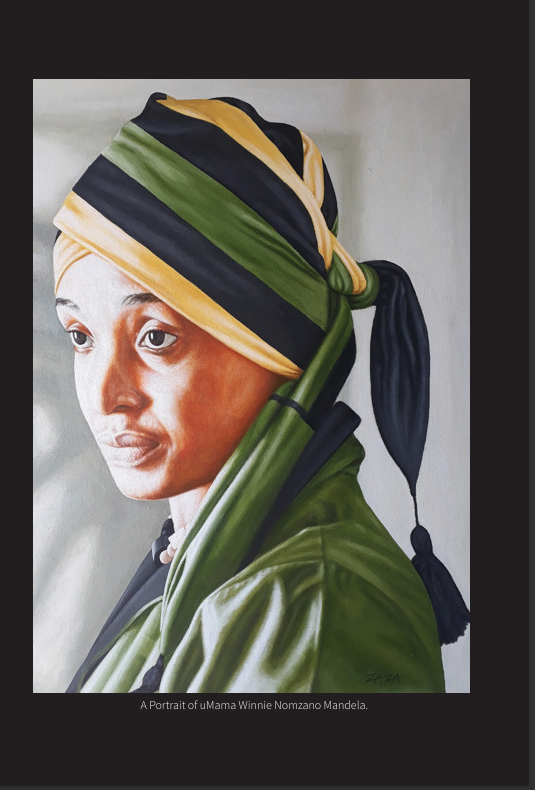
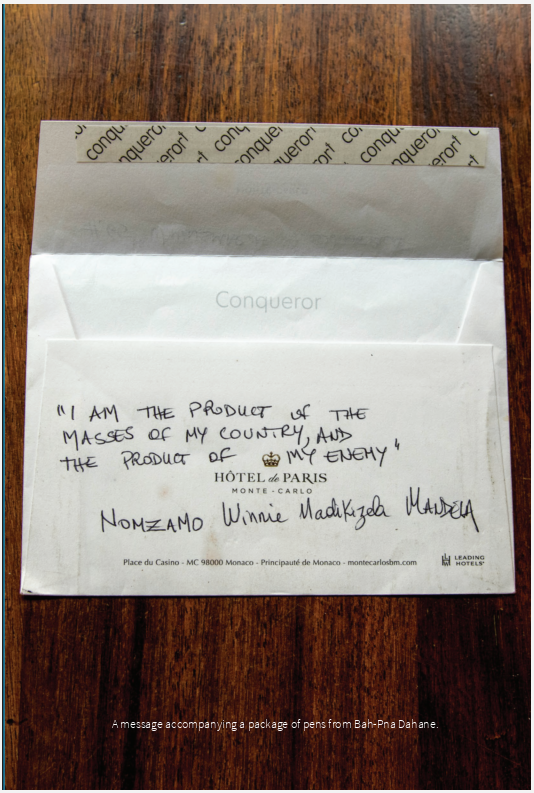
“I am the product of the masses of my country, and the product of my enemy.” Nomzamo Winnie Madikizela Mandela
Dedication and Beginning
To my beloved Queen of Heart Kiyara-Beitcha, Mommy Kherdi-Jeanne, my baby sister Beitcha-Miriam, the Dahane family, my future wife and children, my dear friends, my brothers from another mother, to the entire family and to my two countries, Tchad and France, I wrote this with all of you in mind.
To Teddy Warria, thank you for this wonderful opportunity and privilege to write my first essay to be published in a book, your book, Son of the Nile.
To “Nigist” and her family, thank you for the invaluable lesson of love and support. I will always be grateful for everything you brought me.
The source essay begins with a song of freedom and with the atmosphere of memory, gratitude, liberation, and the responsibility to keep telling the story.
Washington, D.C., 15 December 2020
Dear Teddy,
I started writing this on 5 December 2020 at the Cafe du Parc at the Willard Intercontinental Hotel, a few blocks from the National Museum of African American History and Culture, designed by Ghanaian-British architect Sir David Adjaye.
Across from it stands the White House, the residence of powerful U.S. Presidents, built in part by the hands of enslaved Africans. The Cafe du Parc at the Willard is remembered as the place where Reverend Martin Luther King Jr. finished writing the speech that became known as “I Have a Dream.”
Seven years after Nelson Rolihlahla Mandela went to be with the ancestors, I knew it was time to make the effort to write. My dear Kenyan brother, this was not an easy task because I did not know how or where to start.
A Teenage Awakening
I will write what I like about Mandela Magic. It began in my early teens in Bron, a suburb of Lyon in France, after watching A Dry White Season by French Martinique filmmaker Euzhan Palcy.
At around twelve or thirteen years old, we became aware of apartheid as a disease of racism and white supremacy. We were shocked by what was happening. We discovered Rolihlahla Mandela and what he stood for. That summer, we collected signatures with “Free Nelson Mandela” during the Humanity Festival in Lyon.
A Dry White Season turned us into young activists and freedom fighters. We were bugging people with one request: please sign the petition to free Nelson Mandela. We were just doing what we thought doing the right thing was all about.
After years of following the struggle against apartheid, we learned that the man was going to be freed. Sunday, 11 February 1990, is a day I cannot forget.
Free At Last
My father, Assane Dabre Dana, ordered us to stay home and record the release of Nelson Mandela. I had just turned fifteen a month before. I told my friends: no soccer today. I am not allowed to go out until Nelson Mandela is released from prison.
We waited for hours in front of the television. Finally, Mama Winnie Mandela appeared, hand in hand with her husband, walking out of Victor Verster Prison. The power couple raised their fists in the air.
“I stand here before you not as a prophet, but as a humble servant of you, the people.”
Those words hit the spirit of a fifteen-year-old Chadian-French boy. “Humble servant of you, the people” became a phrase I repeated again and again. My late mom, Kherdi-Jeanne, the lioness of Bere, had taught me the same lesson: if you cannot serve humbly with the little you have, you will not do it when you have a lot.
The World Stage
The Rolihlahla magic moved across the world stage. In fashion, Desre Buirski’s Presidential Shirt became part of the Mandela visual memory. The story of a young white woman giving Tata Rolihlahla Mandela the last shirt she had remains astonishing because Madiba had left bitterness behind when he walked out of prison.
The essay also remembers Samuel Mensah and Kisua’s #BeTheLegacy collection, dedicated to Rolihlahla Mandela. African fashion, red carpets, pocket squares, cinema, music, and identity all become part of a broader Mandela language.
On sports, music, film, and the changing Africa narrative, the names gather: Pele, George Weah, Abedi Pele, Roger Milla, Muhammad Ali, Tiger Woods, Michael Jackson, Stevie Wonder, Denzel Washington, Jay-Z, Beyonce, Sembene Ousmane, Euzhan Palcy, Ava DuVernay, and Spike Lee.
What else can we say? Nelson Mandela is a world icon because his life touched the entire world.
WoMEN EmpoHERment
The essay turns from Rolihlahla Mandela toward Mama Winnie Madikizela-Mandela, whom Bah-Pna sees as the woman who helped make Mandela the global icon celebrated today.
It remembers the struggle for women’s voting rights, a Brand South Africa USA discussion on the 19th Amendment centennial, and women’s fights not only for equality but also for equity. From South Africa to Chad, the same thread continues.
The Chadian organization F.O.R.C.E, led by twin sisters Yousra and Bouchra Abdelkerim Ndiaye, appears as another expression of strength: Femmes Osant la Reussite et le Combat pour l'Equite, women daring for success and the fight for equity.
Writing about the Rolihlahla Magic also reminds men to be part of the solution. To man up means teaching young boys how to behave, mentoring them properly, and grounding them in respect.
Dedicated To Mama Nomzamo
Dear brother Teddy, the real motivation behind writing my first essay to be published in a book, your book, is a dedication to Mama Nomzamo Madikizela-Mandela, who made it possible for Mzansi to liberate itself from apartheid, racism, and white supremacy.
It is also for her daughter Zindzi, who is now next to her, the one we came to know globally in 1985 when she read her father’s letter. It was the force of a daughter and her mother addressing Mzansi, the Alkebulan continent, and the rest of the world.
A man who had dedicated his life to dismantling a racist state refused a conditional freedom. A mother and daughter carried his voice to the people.
Before later global conversations about feminism, the essay remembers films, poems, women’s movements, daughters, mothers, and role models as living archives of liberation.
The Last Meeting
My dear brother Teddy, writing about our world icon compelled me to think about and praise Mama Nomzamo Madikizela-Mandela, the most prominent voice of dissent in the struggle against apartheid after the leaders of the ANC, including her husband, were jailed on Robben Island or forced to flee the country.
The last time I saw her was just five months before she passed away. I would never have thought that would be my last time seeing her. Mangaliso Sobukwe, grandson of the great Mangaliso Sobukwe, joined me, and we took what became our final moments with Mama Winnie.
I promised her that day that if my future wife gave birth to a daughter, our daughter would bear her name. My daughter Kiyara-Beitcha will one day be a big sister to Kherdi-Nomzamo Miriam, a sister named after my SHEro.
Let us not forget that Mama Nomzamo Madikizela-Mandela’s 491 Days should be made compulsory reading in every school across South Africa, Alkebulan, and the world.
Funeral, Thunder, Sun
Why does the title have magic in it? Because once you have the privilege of meeting the powerful couple, you can connect with the whole world. I remember the funeral in Qunu, the funeral of the century, where from 5 December to 15 December I met many of the world’s dignitaries.
When Mama Nomzamo passed away, I was already in South Africa. On 13 April, I went to light a candle to pay my respect to Mama Nomzamo.
Her funeral was magic. It was bright, sunny, and hot. As the pastor was closing the funeral, thunder began. The military entered to pick up her coffin. As they marched toward her, rain started. Then came a deluge, thunderstorm after thunderstorm.
As she was finally laid to rest, the rain stopped and the sun reappeared. I leave you to your own conclusion. To me, the ancestors were celebrating her and preparing to welcome her.
Her Voice Became Louder
Thank you Teddy. Thank you Mama Nomzamo “Winnie” Madikizela-Mandela. May your soul rest in peace and power.
“They think because they have put my husband on an island that he will be forgotten. They are wrong. The harder they try to silence him, the louder I will become!”
The line is attributed in the source essay to Nomzamo Madikizela-Mandela, also known as Winnie Mandela, in 1962.
Bah-Pna concludes by thanking the fierce Black women who always stand by us, and by turning toward young girls with a blessing: this one is for you, you are next.
The final movement of the essay praises Black womanhood, beauty, promise, memory, and the eternal form of dignity that no jealous fate can erase.
“I am the product of the masses of my country, and the product of my enemy.” Nomzamo Winnie Madikizela Mandela
The Nelson Mandela Magic · The Nomzamo Magic
Copyright © 2026, Bah-Pna Dahane, Teddy Warria, and SON OF THE NILE VENTURES ("We, Us, Ours"). All rights reserved.